C3945-VSEC-CUBE/K9 Cisco 3925 Secure Voice & Unified Border Element Price & Datasheet

Spread the love

Product Model: C3945-VSEC-CUBE/K9

Retail Price: US$7,971.00

Email Us To Get Special Price Now: [email protected]
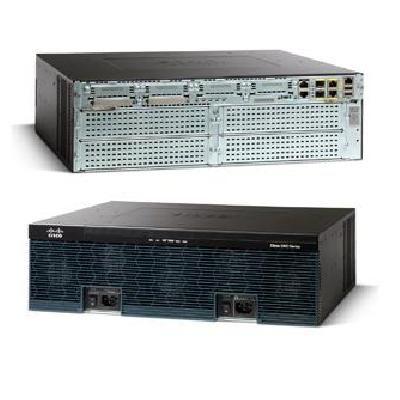

C3945-VSEC-CUBE/K9 is the Cisco 3945 router with VSEC CUBE Bundle, including PVDM3-64, UC SEC License and FL-CUBEE-25.

Quick Specs

Figure 1 shows the appearance of the C3945-VSEC-CUBE/K9.

Table 1 shows the Quick Specs.

Product Code

C3945-VSEC-CUBE/K9

Bundle

PVDM3-64, UC SEC License and FL-CUBEE-25

Services Performance Engine module

w/SPE 150

Rack Units

3U

Interfaces

3 integrated 10/100/1000 Ethernet ports with 2 ports capable of RJ-45 or SFP connectivity

Expansion Slot(s)

4 ( 4 ) x HWIC

3 ( 2 ) x PVDM

2 ( 1 ) x CompactFlash Card

1 ( 1 ) x expansion slot

RAM

1 GB (installed) / 2 GB (max)

Flash Memory

256 MB (installed) / 8 GB (max)

Dimensions

18.7 in x 17.2 in x 5.2 in

Net Weight

39 lbs

Product Details

Figure 2 shows the front panel of the C3945-VSEC-CUBE/K9.

Note:

On/Off switch

Power connector

LEDs area

Figure 3 shows the back panel of the C3945-VSEC-CUBE/K9 with slots and ports.

Note:

Compact flash 0 and 1 (0, right)

10/100/1000 Ethernet port GE 0/1 and GE 0/2 (GE 0/1, down)

EHWIC 0,1,2 and 3 (0, far right)

10/100/1000 Ethernet port GE 0/0

USB serial port

USB 0 and USB 1 (1,top)

RJ-45 serial console port

Ground

AUX port

Service module slots

SFP 1 and SFP 2 (2, top)

Table 2. Voice Security Bundle Features Table

Authentication and Encryption Features

• Media encryption of voice RTP streams using SRTP

• Exchange of RTP Control Protocol (RTCP) information using secure RTCP

• SRTP to RTP fallback for calls between secure and insecure endpoints

• Secure calls supported in Cisco Unified Survivable Remote Site Telephony (SRST) mode during WAN failover

• Compressed RTP (CRTP) supported with media encrypted calls using SRTP

Authentication and Encryption Algorithm

• Supports AES-128 encryption algorithm

• Supports the HMAC secure hash authentication algorithm (SHA 1)

Signaling Authentication and Encryption Features

• Gateway to Cisco Unified Communications Manager signaling and encryption uses IPSec for Media Gateway Control Protocol (MGCP), H.323 and SIP gateways

• IP phone to Cisco Unified Survivable Remote Site Telephony router signaling and encryption uses TLS 
 (Transport Layer Security)

Protocol Support

• MGCP 0.1 (supports MGCP gateways with Cisco Unified Communications Manager)

• H.323 (supported on H.323 gateways and CUBE; Cisco Unified Communications Manager interoperability is optional)

• Session Initiation Protocol (SIP)

• SCCP (Cisco Unified IP Phone) in SRST mode

Module Support

• Any module that has PVDM2, PVDM3 and/or built-in DSP

Codec Support

• G.711, G.729A, and G.729

Table 3 shows the Cisco Unified Border Element Features (CUBE Versions Include 9.5.1 or Later).

Feature

Support Details

Protocols

  • ●   H.323 and SIP

  • Protocol and signal interworking

  • ●   H.323 to H.323 (including Cisco Unified Communications Manager)

  • ●   H.323 to SIP (including Cisco Unified Communications Manager)

  • ●   SIP to SIP (including Cisco Unified Communications Manager)

  • ●   SIP to SIP (including Cisco TelePresence calls)

  • Media support

  • ●   RTP, RTCP, and Binary Floor Control Protocol (BFCP)

  • ●   Sub-RTCP for media statistics

  • Media interworking

  • ●   SIP delayed-offer to SIP early-offer interworking for audio or video calls

  • ●   H.323 Slow Start to H.323 Fast Start for audio calls

  • Media modes

  • ●   Media flow-through

  • ●   Media flow-around

  • Signaling transport mode

  • ●   TCP

  • ●   User Datagram Protocol (UDP)

  • ●   TCP-to-UDP interworking

  • Fax support

  • ●   T.38 fax relay

  • ●   Fax pass-through

  • ●   Fax over G711

  • Modem support

  • ●   Modem pass-through

  • ●   Modem over G711

  • Dual-tone multifrequency (DTMF)

  • ●   H.245 alphanumeric

  • ●   H.245 signal

  • ●   RFC 2833

  • ●   SIP notify

  • ●   Key Press Markup Language (KPML)

  • ●   Interworking capabilities include:

       H.323 to SIP

       RFC 2833 to G.711 in-band DTMF *

       Various SIP-to-H.323 DTMF interworking options

       RFC 2833 to KPML

  • Supplementary services

  • ●   Call hold, call transfer, and call forwarding for H.323 networks using H.450 and transparent passing of Empty Capability Set (ECS)

  • ●   SIP-to-SIP supplementary services (holds and transfers) support using REFER

  • ●   SIP-to-SIP supplementary services (holds and transfers) support using REINVITE

  • ●   H.323-to-SIP supplementary services for Cisco Unified Communications Manager with media termination point (MTP) on the H.323 trunk

  • Internetworking

  • ●   Configurable SIP profiles to manipulate SIP message content, including header fields andSession Descriptor Protocol (SDP) attributes

  • ●   P-Asserted-Identity (PAI), P-Preferred-Identity (PPI), and Remote-Part-ID (RPID) internetworking

  • ●   Unsupported Multipurpose Internet Mail Extensions (MIME)-type attachment pass-through

  • ●   Unsupported SIP header pass-through

  • ●   Dial-peer bind (allows Cisco Unified Border Element to connect to multiple different service providers)

  • ●   Incoming dial-peer match based on remote IP address

  • ●   Assisted RTCP for Microsoft Lync Interoperability

  • Call routing and dialing options

  • ●   E164-based dialing

  • ●   Uniform Resource Identifier (URI)-based dialing

  • ●   Routing based on nonsequential lists (either E164 or URI or both)

  • ●   Dial Peer Groups (Trunk Groups) (outbound routing determined by inbound dial pattern)

  • ●   Server Groups to define order of selection of alternative or backup routing paths for outbound routing

  • Cisco Call Admission Control (CAC)

  • ●   Maximum number of calls per trunk (maximum number of calls)

  • ●   CAC based on IP circuits

  • ●   CAC based on total calls, CPU use, or memory use threshold

  • ●   CAC based on bandwidth availability and call-spike detection

  • ●   Resource Reservation Protocol (RSVP)

  • OPTIONS SIP message support

  • ●   Support for response to OPTIONS-PING messages with OPTION- PING groups based on session target

  • ●   Support for generation of in-dialog OPTIONS-PING messages

  • ●   Support for generation of out-of-dialog OPTIONS-PING messages to control dial-peer status

  • Media recording

  • ●   Media forking features for both voice and video to integrate with Cisco TelePresence Media Recording Servers

  • ●   Active (SIP-based) and passive (application programming interface [API]-based) mechanisms for invoking media forking

  • IP Routing feature

  • ●   Support for Cisco IOS Software-based routing features, including Border Gateway Protocol (BGP), Enhanced IGRP (EIGRP), and Multiprotocol Label Switching (MPLS)

  • ●   Support for Cisco IOS Software-based policy routing features

  • ●   Support for Cisco IOS Software-based access-control-list (ACL) features

  • Voice-quality statistics

  • ●   Packet loss, jitter, and round-trip time (RTT)

  • ●   Per-call leg call-quality statistics

  • ●   Flexible NetFlow call-quality statistics and information

  • ●   Sub-RTCP statistics collection

  • QoS

  • ●   IP Precedence and differentiated-services-code-point (DSCP) marking

  • ●   Per-call QoS packet marking

  • Network Address Translation (NAT) traversal

  • ●   NAT traversal support for SIP phones deployed behind non-Application Line Gateway (ALG) data routers

  • ●   Stateful NAT traversal

  • ●   IPv4-to-IPv6 translation

  • Network hiding

  • ●   IP network privacy and topology hiding

  • ●   IP network security boundary

  • ●   Intelligent IP address translation for call media and signaling

  • ●   Back-to-back user agent, replacing all SIP-embedded IP addressing

  • ●   History information-based topology hiding and call routing

  • Number translation

  • ●   Number translation rules for voice-over-IP (VoIP) numbers

  • ●   URI-based dialing translations

  • Codecs

  • ●   G.711 mu-law and a-law

  • ●   G.722 and G.722.2

  • ●   G.723ar53, G.723ar63, G.723r53, and G.723r63

  • ●   G.726r16, G.726r24, and G.726r32

  • ●   G.728

  • ●   G.729, G.729A, G.729B, and G.729AB

  • ●   Internet Low Bitrate Codec (iLBC)

  • ●   Midcall codec renegotiation

  • ●   Adaptive Multirate (AMR) wideband

  • ●   AAC-LD

  • Transcoding

  • ●   Transcoding between any two different families of codecs from the following list:

       G.711 a-law and mu-law

       G.729, G.729A, G.729B, and G.729AB

       iLBC

       G.722

  • ●   Midcall transcoder insert and drop

  • Security

  • ●   Rogue SIP invite and rogue RTP packet detection

  • ●   Alerts for rogue packet activity

  • ●   IP Security (IPsec)

  • ●   Secure RTP (SRTP)

  • ●   Transport Layer Security (TLS)

  • ●   SRTP-to-RTP interworking

  • Authentication, authorization, and accounting (AAA)

  • ●   AAA with RADIUS

  • Voice media applications

  • ●   Tool Command Language (Tcl) scripts support for application customization

  • ●   VoiceXML 2.0 script support for application customization

  • ●   Web-based API to monitor and control signaling and media traffic

  • API

  • ●   Web-based API compatible with Web Service Description Language (WSDL) development tools to support call monitoring and control, call-detail records (CDRs), and serviceability attribute interaction with external application; specifically designed for voice-policy applications

  • Billing

  • ●   Standard CDRs for accurate billing available through:

       AAA records

       Syslog

       Simple Network Management Protocol (SNMP)

  • Lawful intercept

  • ●   Provision of replicated packets to third-party mediation device

  • Remote phone proxy sessions

  • ●   Termination of SIP-TLS and SRTP with registration pass-through to allow SIP-based endpoints, including Cisco Unified IP Phone 7900, 8900, and 9900 models and Jabber® Voice Client, to connect from remote sites through the Internet without requiring IPsec VPN to Cisco Unified Communications Manager, Cisco Business Edition, or Cisco HCS (not included with NANOCUBE license)

  • Line-side back-to-back user agent NANOCUBE sessions

  • ●   Termination of Cisco Shared Port Adapter (SPA) and other third-party SIP endpoints with registration passthrough and survivability for use with third-party hosted call-control service provider services

  • Inter-Cluster Lookup Service (ILS) routing

  • ●   Support for ILS routing to complement ILS dial-plan exchange between Cisco Unified Communications Manager clusters or to simplify call-routing complexity between multiple clusters

  • Video

    Protocols

  • ●   H.323 and SIP

  • Cisco endpoints supported

  • ●   Cisco Unified Video Advantage (UVA) and Cisco TelePresence endpoints

  • Rich media

  • ●   Simultaneous support for data, audio, and video

  • Signaling interworking

  • ●   SIP delayed-offer to SIP early-offer calls

  • Media

  • ●   Support for multiplex RTP calls (for Cisco TelePresence solution)

  • ●   Simple Traversal of UDP through NAT (STUN)/Datagram TLS (DTLS) pass-through for telepresence

  • H.323-enhanced features

  • ●   H.235 pass-through for secure calls

  • ●   H.239 pass-through for picture-in-picture feature

  • QoS

  • ●   DSCP markings to prioritize video streams as they traverse the network

  • Data support

  • ●   T.120 data collaboration flow-around only

  • Camera control

  • ●   Far-end camera control (FECC)

  • Video codecs

  • ●   H.261

  • ●   H.263

  • ●   H.264

  • Network Management

    Manageability and serviceability

  • ●   Resource usage monitoring over SIP trunk

  • ●   SNMP per-call quality traps

  • ●   SNMP and syslog SIP trunk status messages

  • High Availability

    High availability

  • ●   Inbox redundancy on Cisco ASR 1006

  • ●   Box-to-box redundancy on Cisco ASR 1000 (based on RG Infrastructure)

  • ●   Box-to-box redundancy on Cisco ISRs (Hot Standby Router Protocol [HSRP]-based)

    Note: Media is preserved for active calls at time of failover in each redundancy configuration listed.

  • Compare to Similar Items

    Table 4 shows the comparison.

    Model

    C3945-VSEC-CUBE/K9

    CISCO3945/k9

    SPE

    w/SPE 150

    w/SPE 150

    Interface

    3GE

    3GE

    Rack Unit

    3U

    3U

    Bundle

    C3945 VSEC CUBE Bundle, PVDM3-64,

    UC SEC Lic, FL-CUBEE-25

    None

    Get more information

    Do you have any question about the C3945-VSEC-CUBE/K9

    Contact us now via Live Chat or [email protected].

    Specification

    C3945-VSEC-CUBE/K9 Datasheet

    C3945-VSEC-CUBE/K9 Specification

    Manufacturer

    Cisco Systems, Inc

    Manufacturer Part Number

    C3945-VSEC-CUBE/K9

    Product Type

    Router

    Form Factor

    Desktop – modular – 3U

    Connectivity Technology

    Wired

    Data Link Protocol

    Ethernet, Fast Ethernet, Gigabit Ethernet

    Network / Transport Protocol

    TCP/IP, UDP/IP, RSVP, IPSec, PPPoE, L2TPv3

    Routing Protocol

    OSPF, IS-IS, BGP, EIGRP, DVMRP, PIM-SM, IGMPv3, GRE, PIM-SSM, static IPv4 routing, static IPv6 routing, policy-based routing (PBR)

    Remote Management Protocol

    SNMP, RMON

    Encryption Algorithm

    SSL

    Features

    Firewall protection, NAT support, VPN support, MPLS support, Syslog support, content filtering, IPv6 support, Class-Based Weighted Fair Queuing (CBWFQ), Weighted Random Early Detection (WRED), Quality of Service (QoS), Dynamic Multipoint VPN (DMVPN)

    Compliant Standards

    IEEE 802.3, IEEE 802.1Q, IEEE 802.1ah, IEEE 802.1ag

    DRAM Memory

    1 GB (installed) / 2 GB (max)

    Flash Memory

    256 MB (installed) / 8 GB (max)

    LED Status Lights Indicators

    Link activity, power

    Communications

    Type

    Voice / fax module

    Digital Ports Qty

    64

    Protocols & Specifications

    ITU T.38

    IP Telephony

    VoIP Protocols

    H.323, SIP

    Voice Codecs

    G.711, G.722, G.723, G.728, G.729, G.729a, G.729ab, G.711u, G.711a, G.726, iLBC

    IP Telephony Features

    Call forwarding, automatic fax/modem detection and pass-through, call hold, call transfer, DTMF generation/detection

    Connectivity Slots

    Router Interfaces

    3 x 10Base-T/100Base-TX/1000Base-T – RJ-45

    Management : 1 x console – RJ-45

    Management : 1 x console – mini-USB Type B

    Serial : 1 x auxiliary – RJ-45

    USB : 2 x 4 pin USB Type A

    2 x SFP (mini-GBIC)

    Expansion Slots Total (Free)

    4 ( 4 ) x HWIC

    3 ( 2 ) x PVDM

    2 ( 1 ) x CompactFlash Card

    1 ( 1 ) x expansion slot

    Power Supply

    Power Device

    Power supply – internal

    Voltage Required

    AC 120/230 V ( 50/60 Hz )

    Dimensions / Weight / Miscellaneous

    Approximate Width

    18.7 in

    Depth

    17.2 in

    Height

    5.2 in

    Weight

    39 lbs

    Compliant Standards

    CISPR 22 Class A, CISPR 24, EN55024, EN55022 Class A, EN50082-1, CAN/CSA-E60065-00, ICES-003 Class A, CS-03, AS/NZS 3548, FCC CFR47 Part 15, EN300-386, UL 60950-1, IEC 60950-1, EN 60950-1, CSA C22.2 No. 60065, BSMI CNS 13438

    System software

    Software Included

    Cisco IOS Unified Communications, Cisco IOS Security, Cisco Unified Border Element Enterprise Edition (25 sessions)


    Spread the love

    Leave a Comment

    Your email address will not be published. Required fields are marked *

    Call Us Now
    Scroll to Top