Product Model: AP7060DN
Retail Price: US$391.00
Email Us To Get Special Price Today: [email protected]
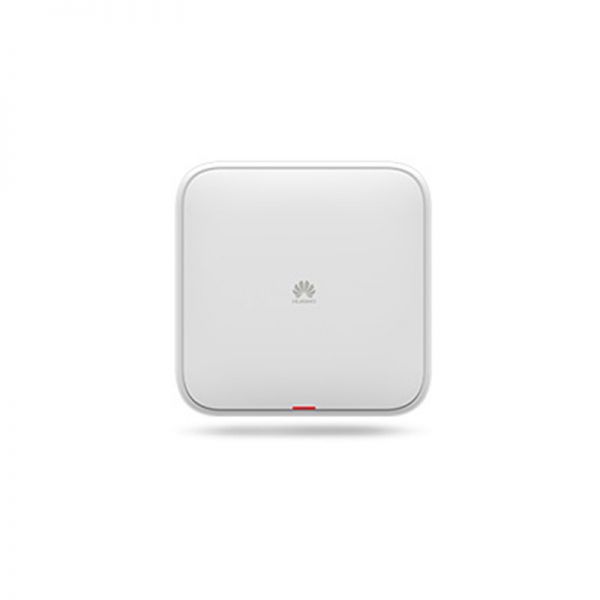
The AP7060DN is a cutting-edge 802.11ax wireless access point (AP) with built-in omnidirectional antennas. The device rate can reach up to 5.95 Gbps. On the 2.4 GHz band, the AP7060DN supports 4×4 MIMO and four spatial streams, achieving a rate of 1.15 Gbps.
Quick Spec
Table 1 shows the Quick Specs.
|
Product Model |
AP7060DN |
|
Dimensions (H x W x D) |
57 mm x 220 mm x 220 mm |
|
Interface type |
1 x 10/100/1000M self-adaptive Ethernet interface (RJ45) 1 x 100/1000M/2.5G/5G/10G self-adaptive Ethernet interface (RJ45) 1 x Management console port (RJ45) 1 x USB interface |
|
External IoT module |
1 x External IoT module (supporting ZigBee and RFID) |
|
Built-in Bluetooth |
BLE5.0 |
|
LED indicator |
Indicates the power-on, startup, running, alarm, and fault states of the system. |
|
Power input |
DC: 42.5 V to 57 V PoE power supply: In compliance with 802.3 at/bt. |
|
Maximum number of SSIDs for each radio |
16 |
|
Maximum number of users |
512 NOTE The actual number of users varies according to the environment. |
Product Details
Huawei AP7060DN provides these features:
- Provides services simultaneously on both the 2.4 GHz and 5 GHz bands, at a rate of up to 1.15 Gbps at 2.4 GHz, 4.8 Gbps at 5 GHz, and 5.95 Gbps for the device.
- Provides a 10GE uplink interface that supports 100M/1000M/2.5G/5G auto-sensing.
- Supports Bluetooth serial interface-based O&M through built-in Bluetooth and CloudCampus APP, and precise locating of Bluetooth terminals by collaborating with eSight.
- Provides a USB interface for external power supply and storage.
- Provides an external IoT module, allowing for flexible IoT application extension.
- Supports the Fat, Fit, and cloud modes and enables Huawei cloud-based management platform to manage and operate APs and services on the APs, reducing network O&M costs.
Compare to Similar Items
Table 2 shows the comparison.
|
Product Model |
AP7060DN |
AP7152DN |
|
Dimensions (H x W x D) |
57 mm x 220 mm x 220 mm |
52 mm x 220 mm x 220 mm |
|
Built-in Bluetooth |
BLE5.0 |
BLE4.1 |
|
Antenna type |
Built-in dual-band omnidirectional antennas |
external dual-band omnidirectional antennas |
|
Antenna gain |
2.4GHz: 4.6dBi 5GHz: 5.6dBi |
2.4G / 5G (switchable): 3.5 dBi/ 4 dBi 5G (non-switchable): 4 dBi |
|
Maximum number of SSIDs for each radio |
16 |
16 |
|
Maximum number of users |
512 |
512 |
|
Maximum transmit power |
2.4G: 24 dBm (combined power) 5G: 27 dBm (combined power) |
2.4G /5G (switchable): 26 dBm/21 dBm (combined power) 5G (non-switchable): 24 dBm (combined power) |
|
Power increment |
1 dBm |
1 dBm |
Get More Information
Do you have any question about the AP7060DN?
Contact us now via Live Chat or [email protected].
AP7060DN Datasheet
AP7060DN Specification |
|||
|
Dimensions (H x W x D) |
57 mm x 220 mm x 220 mm |
||
|
Weight |
1.8 kg |
||
|
Interface type |
1 x 10/100/1000M self-adaptive Ethernet interface (RJ45) 1 x 100/1000M/2.5G/5G/10G self-adaptive Ethernet interface (RJ45) 1 x Management console port (RJ45) 1 x USB interface |
||
|
External IoT module |
1 x External IoT module (supporting ZigBee and RFID) |
||
|
Built-in Bluetooth |
BLE5.0 |
||
|
LED indicator |
Indicates the power-on, startup, running, alarm, and fault states of the system. |
||
|
Power input |
• DC: 42.5 V to 57 V • PoE power supply: In compliance with 802.3 at/bt. |
||
|
PoE power supply mode |
2.4GHz |
5GHz |
Maximum power consumption (excluding USB and IoT) |
|
802.3bt(PoE++) |
4×4 |
8×8 |
<30W |
|
802.3at(PoE+) |
3×3 |
6×6 |
<25.5W |
|
NOTE: The actual maximum power consumption depends on local laws and regulations. |
|||
|
Operating temperature |
–10°C to +50°C |
||
|
Storage temperature |
–40°C to +70°C |
||
|
Operating humidity |
5% to 95% (non-condensing) |
||
|
Dustproof and waterproof grade |
IP41 |
||
|
Altitude |
–60 m to +5000 m |
||
|
Atmospheric pressure |
53 kPa to 106 kPa |
||
|
Antenna type |
Built-in dual-band omnidirectional antennas |
||
|
Antenna gain |
2.4GHz: 4.6dBi 5GHz: 5.6dBi NOTE: 1. The gains above are the single-antenna peak gains. 2. The equivalent antenna gain after all 2.4 GHz or 5 GHz antennas are combined is 4 dBi in 2.4 GHz or 2 dBi in 5 GHz. |
||
|
Maximum number of SSIDs for each radio |
≤ 16 |
||
|
Maximum number of users |
≤ 512 NOTE: The actual number of users varies according to the environment. |
||
|
Maximum transmit power |
2.4G: 24 dBm (combined power) 5G: 27 dBm (combined power) NOTE: The actual transmit power depends on local laws and regulations. |
||
|
Power increment |
1 dBm |
||
|
Maximum number of non–overlapping channels
|
2.4 GHz(2.412GHz~2.472GHz) l • 802.11b/g − 20MHz:3 l • 802.11n − 20MHz:3 − 40MHz:1 l • 802.11ax − 20MHz:3 − 40MHz:1 5 GHz(5.18GHz~5.825GHz) l • 802.11a − 20MHz:13 • 802.11n − 20MHz:13 − 40MHz:6 l • 802.11ac − 20MHz:13 − 40MHz:6 − 80MHz:3 − 160MHz:1 l • 802.11ax − 20MHz:13 − 40MHz:6 − 80MHz:3 − 160MHz:1 NOTE: The table uses the number of non-overlapping channels supported by China as an example. The number of non-overlapping channels varies in different countries. For details, see the Country Codes & Channels Compliance |
||
|
Safety standards |
UL 60950-1 CAN/CSA 22.2 No.60950-1 IEC 60950-1 EN 60950-1 GB 4943 IEC 62368-1 EN 62368-1 |
||
|
Radio standards |
ETSI EN 300 328 ETSI EN 301 893 RSS-210 AS/NZS 4268 |
||
|
EMC standards |
EN 301 489-1 EN 301 489-17 ETSI EN 60601-1-2 FCC Part 15 ICES-003 YD/T 1312.2-2004 ITU k.20 GB 9254 GB 17625.1 AS/NZS CISPR22 EN 55022 EN 55024 CISPR 22 CISPR 24 IEC61000-4-6 IEC61000-4-2 |
||
|
IEEE standards |
IEEE 802.11a/b/g IEEE 802.11n IEEE 802.11ac IEEE 802.11ax IEEE 802.11h IEEE 802.11d IEEE 802.11e IEEE 802.11k IEEE 802.11u IEEE 802.11v IEEE 802.11w IEEE 802.11r |
||
|
Security standards |
802.11i, Wi-Fi Protected Access 2(WPA2), WPA 802.1X Advanced Encryption Standards(AES), Temporal Key Integrity Protocol(TKIP) EAP Type(s) |
||
|
EMF CENELEC |
EN 62311 CENELEC EN 50385 OET65 RSS-102 FCC Part1&2 FCC KDB Series |
||
|
RoHS |
Directive 2002/95/EC & 2011/65/EU |
||
|
Reach |
Regulation 1907/2006/EC |
||
|
WEEE |
Directive 2002/96/EC & 2012/19/EU |
||